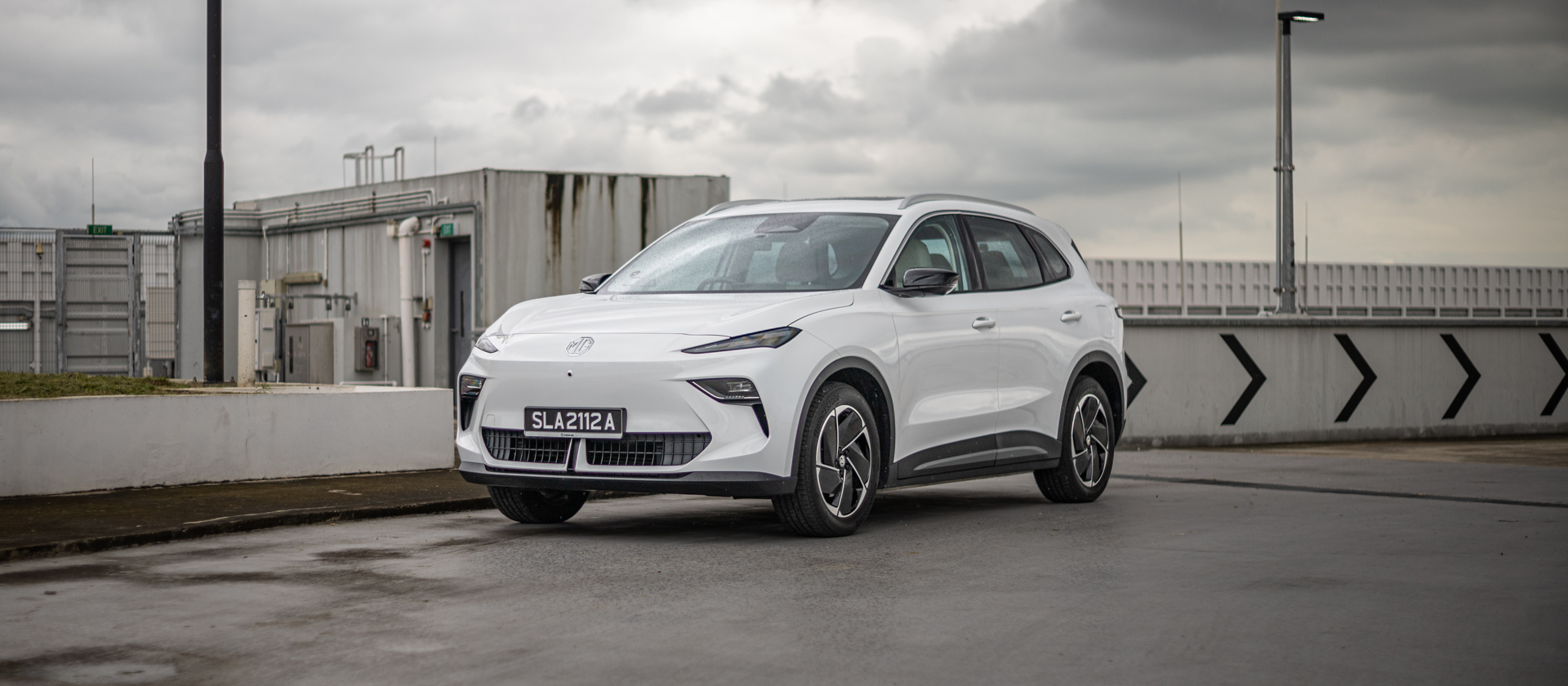
Steadily (and very quietly), the Koreans have become unlikely technological leaders in the EV space. The proof is in the pudding, or in this case, in a 2021 Kia Niro EV. Despite it being based on last-generation hardware (it has been superseded afterall), it can still hold its own, even amongst the current crop of electric cars.
Even back then, whilst other car makers continued to pursue features and gimmicks, the Hyundai Motor Group appeared to be focusing on the refinement of their powertrain. The result is a highly durable and efficient powertrain that is still competitive despite it being launched four years ago.

And we thoroughly tested this, by attempting to drive this very example up to Kuala Lumpur without recharging. That’s a separate story, so click here if you are interested in how that went.

Kia Niro Electric 64 kWh Specifications
Powertrain: Permanent Magnet Synchronous Motor
Output: 201 bhp, 395 Nm
0-100km/h: 7.8 seconds
Top Speed: 167 km/h
Efficiency: 6.8 km/kWh
Dimensions: 4,375 mm x 1,805 mm x 1,560 mm
Wheelbase: 2,700 mm
Unassuming Looks
The electric Kia Niro doesn’t look all that different from its hybrid brethren. For the most part, the cars are identical visually, save for the lack of a fuel filler cap on the quarter panel, and the blue highlights in some of the exterior trim panels.

It also has a blanked off front grille, with a flap built into the left side that shields its charge port from the elements. By no means is this a bad-looking car, but you’d struggle to call this a looker too.
There are strong utilitarian vibes from the overall exterior design, with simple, fuss-free body lines that shows last-generation Niro EV buyers valuing simplicity and practicality. Which is what you’re getting with a family-oriented electric SUV to begin with.
Mostly Functional Interior
Kias of even its vintage came fairly well equipped. But there are signs of this vehicle’s age. Whilst the infotainment screen comes with Android Auto and Apple CarPlay, it has a form factor similar to that of a double DIN head unit. The screen resolution itself could have been better too.

Another giveaway of the Niro’s age is its steering wheel. Again it has all the buttons and switches that you’d expect from a current day car, but the overall design looks out-of-date. It is very usable though, with a thin rim and its leatherette making it comfortable to hold onto even on longer journeys.
The overall boxy shape of this Niro generation translates into superior passenger comfort. On our trip to KL in this, three of us shared driving duties. And regardless of the seat we found ourselves in, fatigue was never an issue, with ample head, knee and leg room needed to keep that at bay. Front occupants are also kept further alert with the inclusion of ventilated seats.
How’s That Battery Holding up?
Very well, actually. This may have been a two year old fleet car with more than 30,000 kilometres on the odometer, but it should still match the range estimates Kia quoted for the vehicle. We could do an estimated 440 kilometres, even with the majority of the driving done at higher speeds on the North-South Highway, if we ran the battery fully down.

If we commuted regularly, it’d easily come very close to the WLTP estimate of 480 kilometres. Keep in mind that based on all of the testing I’ve done, a comfortable real-world range estimate is about 90% of the manufacturer’s WLTP claim. On that front, the Niro EV has done admirably.
And we didn’t hypermile or drive this at a slow speed either. We were carrying sufficient pace to keep up with fast-moving traffic. From that, we can conclude that the 64kWh battery shows basically no degradation. The electric motor’s 201bhp appeared to all be there too.

There’s a surprisingly mechanical feel through the steering wheel, with decent overall wheel weight adding to the sense of quality. Pick up is strong, and we have no reason to doubt Kia’s 0-100km/h claim of 7.8 seconds. It also rides amazingly well too, considering this is a high-riding electric crossover.
Still Thoroughly Competitive
It may have already been replaced, but the previous generation Kia Niro EV is still an extremely solid overall package. And this fact is made all the more impressive, considering that it was never developed as a ground-up electric car to begin with.
They are fairly uncommon on the private resale market, but with the first owner(s) already taking the worst hit of depreciation, the Kia Niro EV is a great value proposition if you are just looking to purchase your first electric car.

Kia’s battery technology appears to be robust, with efficiency figures that exceed some modern, dedicated EVs. With space for five, a comprehensive spec list and sizable cargo capacity, where else can you find a used electric package as competitive as this?


You May Be Interested In: Kia Niro Hybrid – Possibly The Best Hybrid Crossover on Sale Today