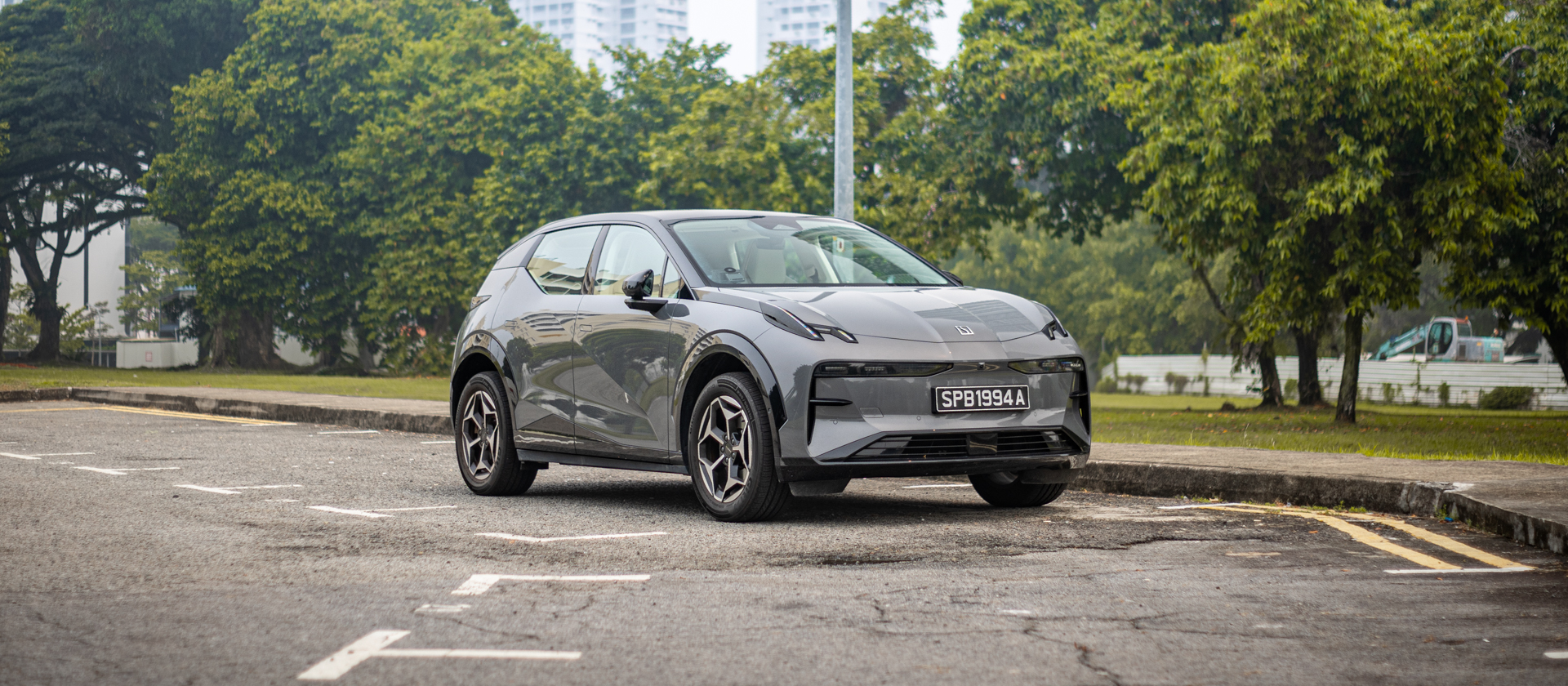
Earlier this year, French automaker Peugeot unveiled its newly-refreshed E-2008 compact electric crossover to the Singapore market.
The mid-cycle refresh tackles all of the usual facelift variant items, and with a few additional alterations sprinkled into the mix too. It gains the brand’s new corporate identity, as well as a new name.

And the changes don’t stop there, and aren’t just cosmetic only. In fact, for a routine, mid-life update, the alterations aren’t insignificant.
2024 Peugeot E-2008 Technical Specifications
So, What has Changed?
Visually, the most obvious changes are to its front fascia. It proudly wears Peugeot’s new badge, being the second model in Singapore to do so after the 408. The design is more cohesive in this area too, as the new grille is better integrated visually with its headlights.

Also, the headlights themselves have been simplified, which plays nicely with the newly-introduced tri-claw DRLs included as part of the Peugeot Signature Light. The rear end survives the refresh without any significant changes, though it gains a pair of new brake lights.

On the inside, most of the cabin remains identical to the original car. But the future-forward touches, like Peugeot’s i-Cockpit concept, allows the E-2008 to still look fresh in this department without the need for drastic overhauls. My only real gripe with the car is its lack of colour in the interior – some splashes of a contrasting hue would go a long way in uplifting its cabin.

And speaking of its cabin, when compared directly to its Stellantis counterparts, the E-2008 has the least claustrophobic second row. It has larger windows allowing for a better view out, and has sufficient headroom in the back. Knee room can be a challenge though, especially if you are exceptionally tall.
The Mechanical Updates
Unlike the visual alterations, the mechanical changes are far more substantial. Peugeot has fitted the E-2008 with a new traction motor, which incorporates technology that allows it to have higher levels of efficiency. And it does this without compromising on power – the new car actually has a slightly higher output than the original e-2008.

It also has a new battery pack fitted, with improved capacity. The new pack is now rated at 54 kWh, up from 50 kWh. These enhancements mean the car should now do 436 kilometres on a single charge, a not-insignificant 90 kilometre improvement over its predecessor.
Peugeot didn’t disclose if it made any changes to the suspension, but it definitely feels very similar to the original car. It has a stiffer ride than its Stellantis siblings, which helps it feel sporty when you are zipping in and out of gaps in town.

The urgency of an electric drivetrain furthers that sensation, though an overboosted (and comfort-oriented) steering rack does dull the drive. Still, this is likely to not be a dealbreaker, as I’m sure not many E-2008 buyers are looking for warm-hatch levels of handling prowess bundled with their electric crossover.
A Calculated Update
On paper, the updates appear to be fairly minor. A slight power bump (134 bhp versus 130 bhp), and a marginal increase in battery capacity (up 4 kWh) are factors that appear to not necessarily be noteworthy.

But yet these numbers don’t tell you the full truth. In reality, this new car will comfortably do 350+ kilometres in the real world. This works out to be around a 16% increase in overall efficiency compared to the original e-2008 I drove a few years back.
And the additional range completely changes the way you are able to use the car, making this an even more compelling package for those seeking a style yet affordable European electric car!


You May Be Interested In: 2023 Peugeot 408 Review – Quirkiness, With Substance