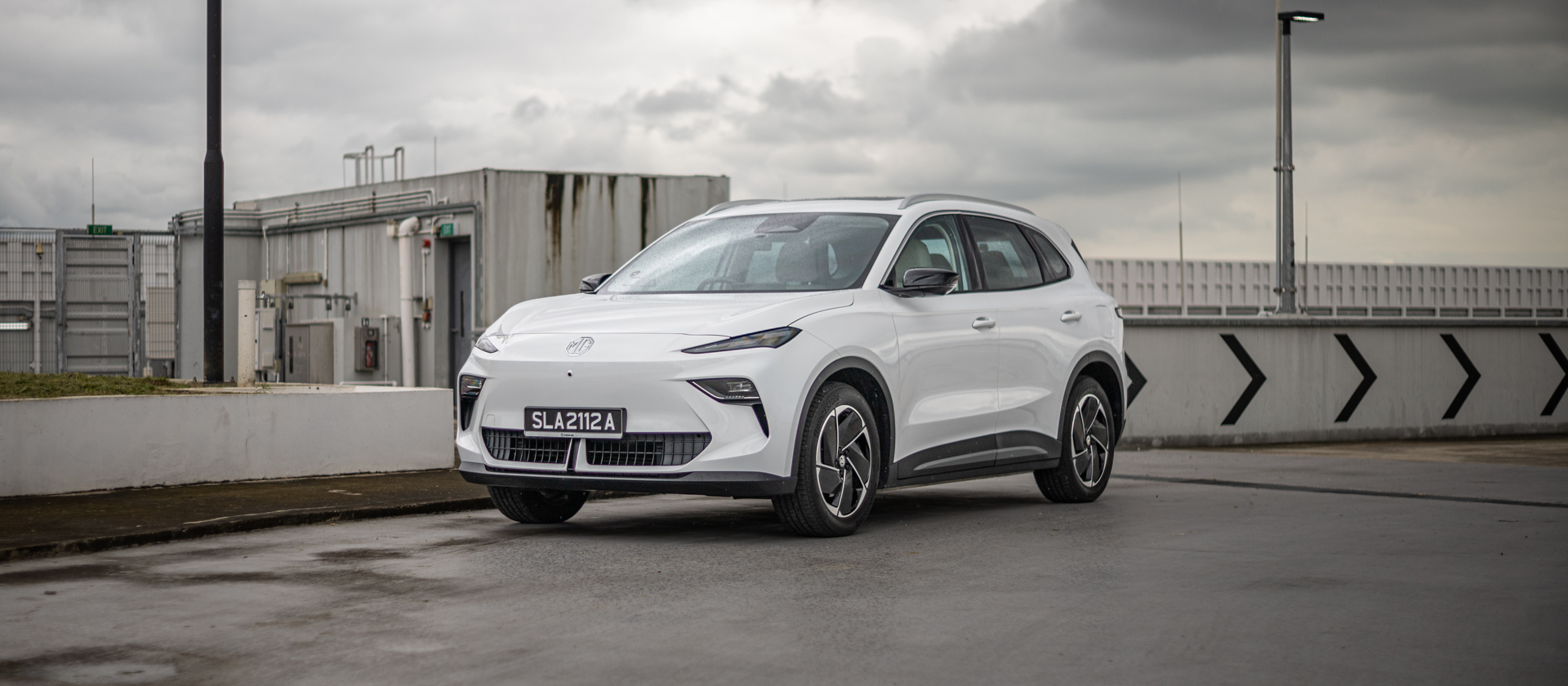
Volkswagen wanted to show to the world that electric crossovers can be fun too. Which is why they’ve introduced the “GTX” moniker to their electric offerings.
It is to their electric cars what the “GTI” badge is to their past and present petrol models. These cars, therefore, are essentially souped up versions of the standard vehicles. Though that is quite the understatement, as the ID.4 GTX actually has not insignificant differences in the powertrain as compared to the regular car.
2024 Volkswagen ID.4 GTX Technical Specifications
So how different are the cars really? Well, where the standard ID.4 has to make do with a single, rear-mounted electric motor, the GTX variant has an additional motor up-front. The former has 282 bhp and is rear-wheel drive, whilst the latter produces a combined 389 bhp, with power being distributed across all four wheels.
Not a Stereotypical EV Visually
Most manufacturers opt to prioritise aerodynamics over aesthetics in their electric vehicles. A logical trade-off, as buyers are seeking out maximum range and efficiency. This usually results in most EVs on the market having a very similar overall design – think low-slung profile with smooth curves from head to tail.

But the ID.4 GTX doesn’t subscribe to that ethos. And yet it manages to achieve a drag coefficient of 0.29 Cd (for context, a Highland Model 3 has a 0.21 rating). The general styling is a mixture of elements borrowed from the ID. Buzz blended with your traditional Volkswagen crossover design.

You get a cool, retro-esque front fascia, which is then paired with a refreshingly crease-less side profile. The rear end is straight up recognisable as a VW, and you wouldn’t mistake this for an ICE car, as it lacks tailpipes and a large front grille. Other EV-specific touches include smaller-than-average wing mirrors and flush door handles, all presumably done to achieve a lower Cd figure.
The Interior
And the EV-specific platform the ID.4 has been built on continues to pay dividends in the interior too. There are copious amounts of room in the cabin, so you’d be able to make yourself comfortable regardless of the seat you find yourself in. And yes, that includes being the passenger (typically) unlucky enough to be assigned the middle seat.

Build and material quality is as you’d expect from the Germans. Everything is properly screwed together, with no creaks or rattles even on the worst roads locally. All of your major touchpoints feel expensive, though you’d find hard scratchy plastics deployed in high-wear areas.
Most of the interior gubbins have been borrowed from the VAG parts bin, including its new 12.9 inch infotainment screen. There’s logic to the placement of all the buttons and sub-menus, with my only gripe being with the window controls for the driver. And perhaps the car’s lack of wireless Apple CarPlay and Android Auto.

Driving data is displayed on a small, column-mounted screen. And this is a classic case of how size doesn’t actually matter – it’s how you use all of the inches available that really counts. At no point through my test drive did I ever wish the cluster was larger. It gave me all of the information I needed (mostly range and real-time speed) at a quick glance, and the implementation feels very well thought out.
The Drive
As mentioned above, the ID.4 GTX is powered by a pair of electric motors. Combined, they have an output of 389 bhp and 545 Nm of torque. And you can most definitely feel this power, as any motion in this car can be achieved seamlessly and effortlessly. Need to catch a gap in traffic? The urgency in Sport mode makes the car feel agile, despite its almost 2.4 ton kerb weight.

The GTX moniker implies that this particular variant has been set up to be sportier. And whilst it drives better than most non-VAG EV SUVs, don’t expect it to handle as well as a low-riding saloon. The suspension is firm enough to resist excessive amounts of body roll, and yet remains compliant enough for everyday use. This is even more impressive when you take into account its ride height.

It draws all of its current from a floor-mounted, 82 kWh battery. Volkswagen claims it has an efficiency rating of 4.7 km/kWh, though our testing revealed that it’d do a little more (to the tune of about 4.8 to 4.9ish). Real-world range is in the low-400s, but that shouldn’t deter you from considering an ID.4 GTX, as the car can be charged to 100% from empty in as little as 24 minutes (at a DC 175kW charger).
Hot Crossover for the Electric Age
Crossovers have had a bad rep for the longest time. These high-riding vehicles aren’t as capable as true off-roaders, but don’t drive as well as your usual hatchback or saloon car. But Volkswagen has proved that this doesn’t have to be the case.
The electric revolution has fundamentally changed the way car makers package their vehicles. With under-floor battery packs, instant torque delivery and stiffer springs to cope with the added mass, electric crossovers are actually decently entertaining to drive. Not in the traditional sense obviously, but they certainly aren’t the usual dull and wallowy ICE soft-roaders.

It is no GTI for sure, but it doesn’t need to be one. The ID.4 GTX is impressive enough as a package, and is more than worthy of wearing the electric equivalent of the GTI moniker!


You May Be Interested In: The Skoda Enyaq Previews Automaker’s EV Plans for Singapore