The Opel Mokka-e is quite possibly the crème de la crème of all the e-CMP-based Stellantis cars out there. But not for the reasons that you might expect.
All three e-CMP compact crossovers for sale now have very similar mechanical specifications – they all have the same 50kW battery pack and 130bhp electric motor. What makes all three cars different (e-C4, e-2008 and of course the Mokka-e), is that each manufacturer has adopted a very different identity to their mass-market electric crossovers.
2022 Opel Mokka-e Technical Specifications
Where the latter duo bank on over-the-top styling and French quirkiness, the Mokka-e opts for greater restraint. Despite the familial ties, it happens to feel the most mature and well-sorted of the trio.
Grown-up Interior
For the most part, the Mokka-e has a no-nonsense cabin that is fit for purpose. It may have an interior that is built primarily out of hard-wearing black plastics, but nothing feels low-rent. Sufficient contrast with carbon fibre and/or gloss plastics help to break up the monotony of the cabin, which is then further improved by the inclusion of soft-touch materials in high touchpoint areas.

Additional ergonomic enhancements come from seats that offer excellent support, and screens that are optimally placed for viewing comfort. You’ll find two screens mounted side-by-side, in a bezel that Opel dubs the ‘Pure Panel’. There’s a definite driver centricity to this setup, as even the infotainment screen is angled at the driver.
The larger of the two screens, a 12” unit, serves as your instrument cluster, whereas the smaller 10” unit is on infotainment duty. Wired Android Auto and Apple CarPlay are available, so you do not have to rely on the car’s native maps.

Whilst front occupants will have little trouble with room, rear seat passengers may find longer journeys uncomfortable. The narrow body shell eats into shoulder room, and the high window line at the back reduces the amount of natural light entering the cabin, making it feel slightly claustrophobic.
Stylish Exterior
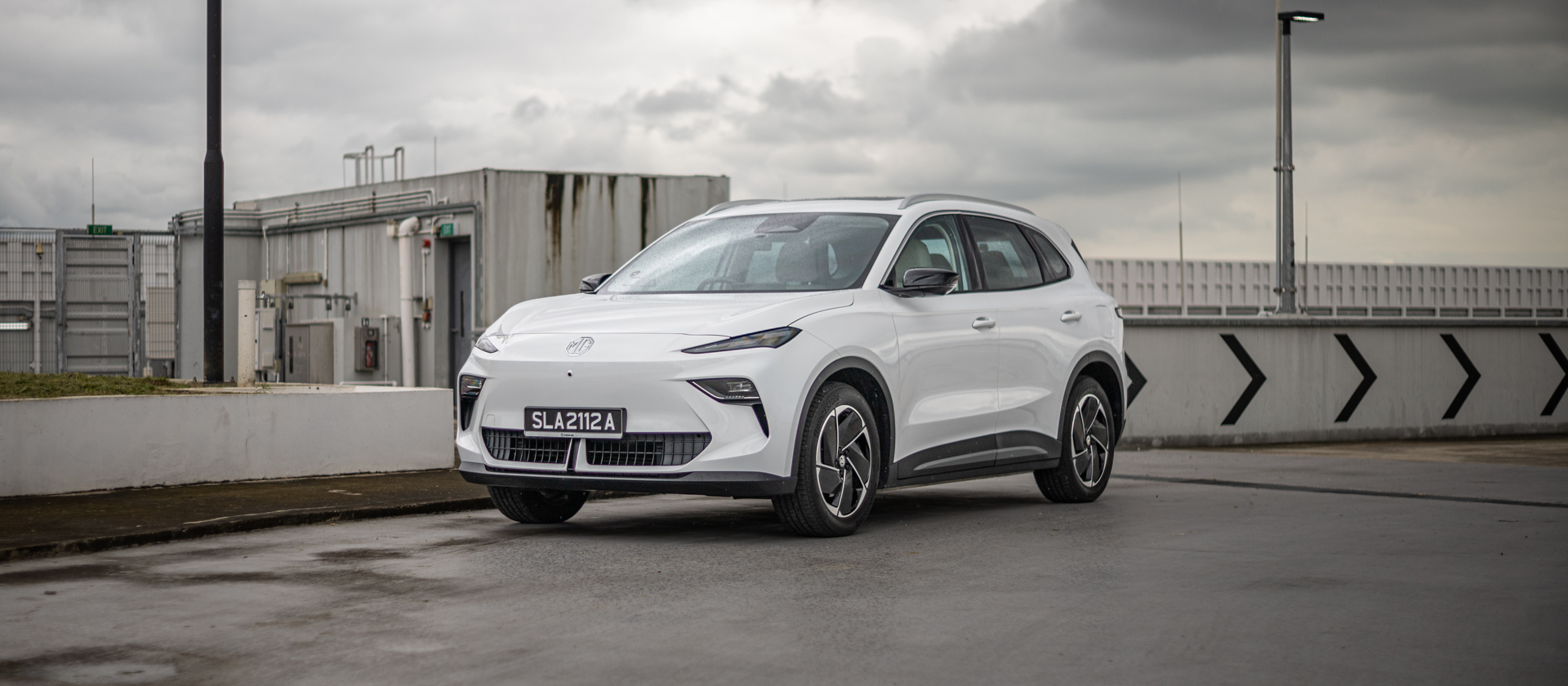
The Mokka-e is one good looking car. Opel’s new Visor design language dominates the front end of this compact crossover, which has then been complemented with bold, muscular lines throughout the body shell.

It’s clear that the car was always designed for a colour-contrast roof, which is why the difference in body colour here works so well. A bold piece of trim breaks up the line between the rest of the body and the roof, and runs the length of the roof pillar.
Careful consideration has also been taken in keeping various exterior plastics unpainted, so nothing looks or feels out of place. In the electrification process, Opel has made no changes to the exterior, as the car never needed it in the first place – the ICE version of the Mokka also did not have a front grille.

With bold lines and a small footprint, the Mokka-e has a certain charm that you’d not find in any other vehicle in its class. The high profile side walls add to its toughness, accentuating the bold lines its designers have graced it with.
Steady Progress
With a greater kerb weight comes the need for stiffened suspension to cope with the additional mass. The EV Mokka therefore, is stiffer than the ICE Mokka, but not by much. It definitely doesn’t ride as well as its petrol-twin, but what it loses in comfort it gains in handling. And it is a trade-off that is well worth it in our books.

Powering the Mokka-e is Stellantis’ 130 bhp electric motor. This is mounted under the bonnet, and drives the front wheels. It provides sufficient oomph to convincingly keep up with even fast moving traffic, with a torque curve that feels fairly linear until you are well into triple digit speeds.
Impressively, it does so whilst the electric motor remains completely silent, with no hums or high frequency noises coming from the electric motor. This serenity is really only broken up by wind noise emitted by the large mirrors at seriously high speeds.

And that’s really the first hint that this is no performance vehicle. Another obvious factor is the presence of noticeable torque steer on power, as well as the lack of feedback through the steering wheel and the brake pedal.
Solid All-Rounder All Things Considered
But these are no bad traits. No one signs up for an economy-centric vehicle expecting hot hatch performance. You want a car that is easy to live with, highly economical, and would not cause you any maintenance headaches down the line.

The Mokka-e ticks all of those boxes. It is easy to drive, cheap to recharge and extremely simple mechanically, as it is an electric car. In the city, the car will average around 7 km/kWh (bang on what Opel claims the car would do). I also spent some time up North with another Mokka-e, and that achieved 6.0 km/kWh despite most of the commute being on the NSHW.
The compact footprint does mean compromised rear headroom, but the styling and product direction seems to hint that it was built with first-time car buyers in mind. And as these people are likely to have smaller families, it is ideal for that application!


Editor’s Note: Article has been updated in October 2024 for additional clarity.
You May Be Interested In: 2024 Opel Combo-e Life Review – The Lone Exception